
LAUGH – Local Access to Universal Good Health
Dental Health Without Borders has embarked on a new partnership in Ghana – and it began with a week in the field in May 2026. Our dental consultant, Karin, travelled to Tamale in northern Ghana to carry out screenings at three village schools, together with our local partner REEP (Rural Engagement and Empowerment Programme) and the two local dental staff members.
The collaboration with REEP began following a joint CISU high school weekend in 2025, during which both organisations discussed the need for preventive dental health initiatives in northern Ghana. Since then, it has developed into a full-fledged project proposal titled LAUGH – Local Access to Universal Good Health.
What did the screenings reveal?
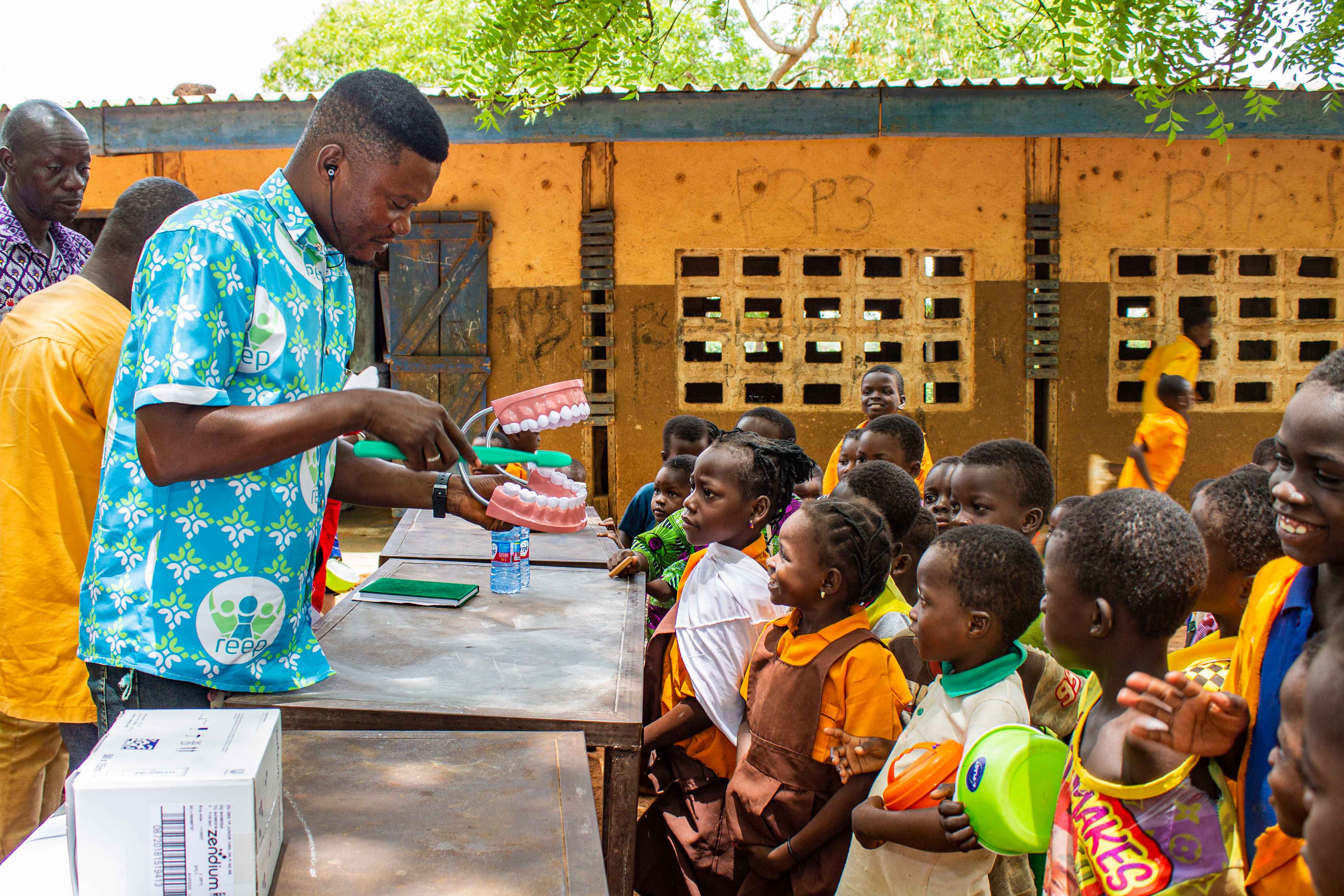
During the week, the team visited three schools – in Tolon, Kumbungu and Savelugu – and screened a total of 70 children. Before the screenings, REEP staff taught teachers and pupils about dental health using DHWB’s educational materials, felt mats and demonstration models for toothbrushing techniques.
The results were a pleasant surprise: virtually no tooth decay. This is a strikingly different picture from what we see in Guatemala and Bolivia, and the explanation appears to be a healthy school diet combined with limited access to sugar and unhealthy snacks.
Conversely, almost all the children had significant plaque, tartar (calculus), and inflammation of the gums (gingivitis). In two girls – both aged 11 – we found severe periodontitis with loose teeth. These are serious findings. The children are used to having sore gums and believe this is normal. It is not, and it has consequences for their general health – not just their oral health.

The way forward
The pilot project is the first step. Based on the promising screening results – and the enormous potential for change using very simple means – we are now working to secure funding for a broader and more long-term initiative that can reach many more schools in the region. REEP itself points out that there are up to 500 schools in northern Ghana, and that the project should eventually be expanded to districts further north. We share this ambition and are delighted to have a committed and well-established partner in REEP to help realise it.
Although this partnership is new, we can already see great potential for making a real difference to children’s dental health in Ghana.